

유리와 수정의 차이점은 무엇입니까?
If you're planning a full course meal for an elegant event or looking to add a sophisticated touch to a romantic dinner, you may find yourself headed to the china cabinet to pull out the good crystal. Crystal glass has long been associated with high-end dining, but why is it considered more luxurious than standard glass? Below we'll clarify the difference between crystal and glass to help you set the table for your next event.
크리스탈 대 유리
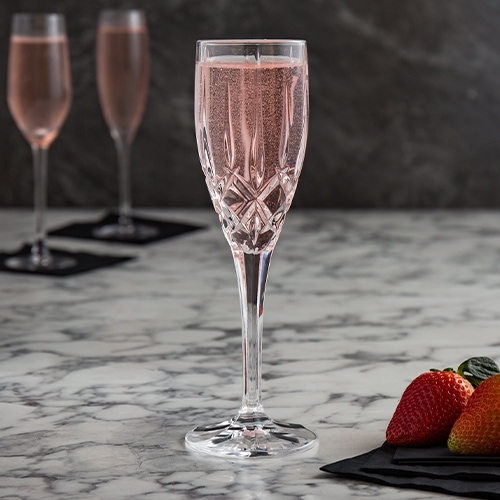
When comparing glass vs crystal, crystal is a type of glass that contains strengthening minerals like lead-oxide, potassium carbonate, and silica to make the material durable. The added strength allows the crystal to be molded into thin, delicate shapes. Standard glass is usually made with sand, soda ash, and limestone, making it durable but unable to be molded as thin as crystal. Crystal is also able to refract light while glass will typically lack that ability, making crystal more sought out for formal table settings and more expensive than glass.
유리 란 무엇입니까?
유리는 녹여서 단단한 모양으로 만들 수 있는 투명한 재료입니다. 그것은 모래, 소다회 및 석회암으로 만들어 지지만 실리카 및 바륨과 같은 다른 미네랄을 추가하여 색상, 내구성 및 두께를 조정할 수 있습니다.
Glass with a low mineral count is non-porous, which makes glass dishwasher safe and heat-resistant. Some popular types of glass used in public settings are borosilicate glass, commonly used for glass food storage containers, and fuzed quartz glass used for camera lenses and lab equipment.
크리스탈이란?
수정 유리는 유리와 동일한 성분으로 만들어진 투명한 소재이지만{0}}산화납 또는 금속{1}}산화물이 추가되었습니다. 추가 성분은 자르거나 불어도 크리스탈이 무결성을 유지하도록 합니다. 크리스탈 유리에 첨가된 성분은 재료를 약간 다공성으로 만들어 빛을 훌륭하게 굴절시키는 능력을 부여합니다. 그러나 이것은 또한 재료가 식기 세척기에 안전하지 않다는 것을 의미합니다.
Crystal is produced by companies around the globe and can be made with varying levels of lead-oxide. Unlike the name suggests, crystal glass does not actually contain a crystalline structure in its material compound. The name is derived from the Italian term "Cristallo", which was used for high-end hand-blown glass in Murano, Italy. Its association with sophistication makes crystal desirable and higher in price than glass.
유리와 수정의 차이점
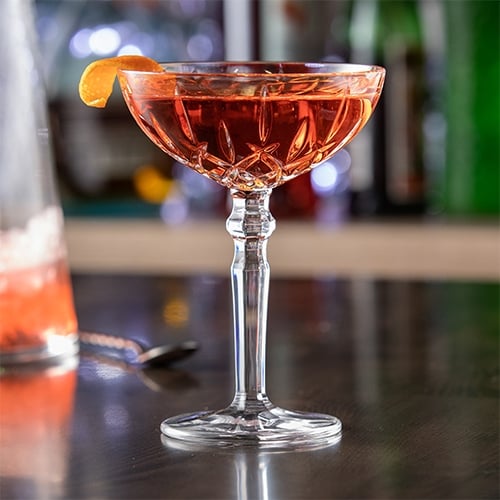
유리와 수정은 모두 용광로에서 녹을 때까지 가열하여 만듭니다. 그런 다음 유리 송풍기로 불어서 원하는 디자인으로 성형합니다. 그러나 두 재료는 화학적 구성과 무게에서 빛을 굴절시키고 소리를 반향시키는 방식에 이르기까지 다양한 차이점이 있습니다. 크리스탈이 더 높은 가격대로 제공되는 이유를 명확히 하기 위해 아래에서 차이점을 자세히 살펴봅니다.
외모 차이
Glass: Glass is often slightly foggy in appearance and can typically feature a tint based on the ingredients in its composition. It can have a green tint if made with iron or a blue tint if made with soda-lime.
Crystal: Crystal boasts incredible clarity, which makes it a desirable choice for high-end glassware and decorations.
무게 차이
Glass: Glass is lighter in weight in comparison to crystal pieces of the same design.
Crystal: Because crystal contains lead or other metals, it tends to be heavier in weight than standard glass of the same design.
두께 차이
Glass: Due to the soda-lime in its chemical composition, glass requires a high working temperature and hardens rather quickly after being heated, which results in a thick rim. The material is more fragile than crystal so most cup rims will be reinforced for added strength.
Crystal: Crystal can be heated at lower temperatures than glass because of the lead and potassium carbonate in the composition. This allows for the glassblower to more easily work the material and make it thin. The additional chemicals also help the material to remain strong while being stretched further than glass.
컷 차이
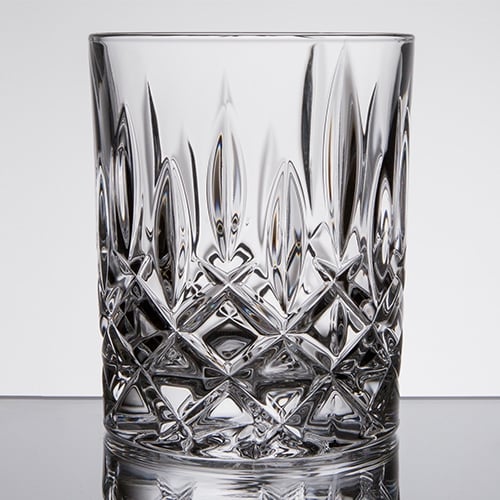
Glass: Since glass hardens more quickly than crystal, it offers little time to be cut by hand. The material is generally too hot to manage with gloves so glass is typically bent into shape while hot or blown into a mold. Any cuts on the surface are usually sharp, rigid, and brittle.
Crystal: Since crystal is strengthened by its minerals, it is soft enough to add smooth hand-cut details to its surface without compromising its durability. The material is more malleable than glass, allowing the artist to add intricate patterns. The cuts can then be buffed and polished without fear of shattering the structure.
굴절 차이
Glass: Glass has very little metal content, which means that light will pass through like a windowpane without refracting. The soda-lime in glass lacks retracting abilities.
Crystal: Because of the lead and metal content in crystal, the material can refract light that passes through it in the right position. Light disperses from crystal in a rainbow hue, making the material desirable for decorations and tableware.
사운드 차이
Glass: Glass provides a dull chime when tapped or flicked. The sound is usually short in length and subtle.
Crystal: When tapped, crystal creates a satisfying bell-like ringing sound. The lead content in the material allows the sounds to be slightly prolonged.
혜택
Glass: Glass tableware is a great option for everyday use because it is made thick and durable. It can be put in the dishwasher for easy cleanup and has a reinforced rim to prevent chips and cracks.
Crystal: Crystal glass refracts light beautifully, glinting light into rainbows. This makes it an excellent choice for cups, bowls, vases, champagne flutes, chandeliers, and ornaments. It can also be molded thin, which means that wine glasses can have a thin rim, providing an uninterrupted flow of wine. Crystal is also popular at weddings because of the ringing noise it makes when glasses are clinked.


